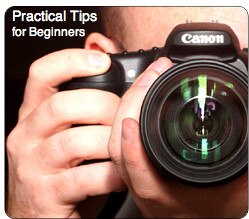
5 TIPS ABOUT DIGITAL PHOTOGRAPHY

It is definitely possible that you can take fantastic photos with a simple point-and-shoot digital camera. The problem doesn't lie with the camera. You can take super lousy shots with the most sophisticated Canon dSLR. It is the skills of the photographer.Below are 10 professional digital photography tips you can use without having to fork out money on expensive equipment:

1. Warming Up the Tones

Do you realized that the shots you took sometimes have a cool, clammy feel? The default white balance setting for most digital camera is "auto". This is okay for most shots but it is more towards the "cool" side.
Try taking a test. Take some outdoor shots with white balance "auto" on and then take the same picture with "cloudy" setting. I am sure you will like the "warm" image better.


2. Use Macro Mode

Some amazing fine details of an object can be taken using "macro" mode. Try activating "macro" mode on your digital camera and explore your surroundings. Objects like flowers and insects can give you very interesting images which you can never thought of.
Bear in mind that you will have shallow depth of field when using "macro" mode. Hence, just focus on the part of the object that is most important for you and let the rest of the image go soft.

3. Use Polarizing Filter

Want to enhance your photos with some punch? You should get yourself a polarizing filter. It is very good for outdoor and landscape shooting. You can lower glare and get rid of unwanted reflections. Polarizing shots have richer and more saturated colors.
Your digital camera can't insert filter? No problem. Use a pair of quality sunglasses. Take them off your eyes and use them as a polarizing filter. Place them as near to your digital camera's lens as possible. It works! I have been using this trick for years!
4. Outdoor Photos that Shine

Do you know you can always put "flash" mode on always? Don't let your digital camera determines the light setting. You can control!
When in "flash on" mode, your camera exposes for the background first. It then adds sufficient flash to illuminate your portrait subject. Your photo will end up where the composition looks good.
Another great technique is to put your object under a shade, e.g: under a tree, and use the flash to illuminate the object. This will keep the person looks comfortable with no squinted eyes due to the sun glare.

5. High Storage Media Cards

Even the most common digital cameras nowadays range between 5-8 megapixel. A high resolution picture can take up massive space. You don't want to miss a great shot because your media card is full. Try to get a 1GB card for your digital camera which are 5 megapixel and above.
Even with just a simple digital camera, you can take great shots. All you need is some creativity and skills. With some professional digital photography tips I mentioned above, you can take on dSLR photographers with lousy skills.

About the AuthorJohnny Sinclar has done photography for over 10 Years and has taught many beginners on how to improve their photography skills. Discover how you can access professional picture-taking secrets and capture the best digital images of your life at http://www.DigitalPhotographySpot.com
Note :
the images above haven't taken by the author, but taken by my self with my Canon digital camera

THE EASE OF USE AND BENEFITS OF DIGITAL PHOTOGRAPHY

Taking pictures on film has limitations. Film cameras are able to produce relatively few pictures: 24 or 36 in standard 35mm cameras. Once taken a picture allows for no recall if an error is made. It will be developed with the rest of the pictures. To get pictures is a slow and expensive process. Displaying pictures is somewhat inconvenient and requires albums or projectors. And how often do we bring these out? Why not go directly from Digital Camera to the computer and benefit from all the features Digital Photography has.

Digital Cameras allow you to see what you want to take, take it, and immediately review the finished product. If the image is unsatisfactory, it can be eliminated. If it is acceptable, there is ample room for its storage in the camera which can hold 100 or more pictures. Once downloaded, the picture storage space on the camera is renewed, and one begins again from zero. No need to carry bulky film canisters. No need to take film in for development and wait for hours or days for its return. No need to dispose of unsatisfactory shots already paid for. No need to order numerous copies for others at considerable expense. There is a good deal of waste and expense associated with film cameras.

With digital cameras even poor images can be saved. There are a number of programs available on the computer to improve the appearance of a picture. Red-eye can be removed by two clicks of a mouse. Images can be sharpened, lighting can be enhanced or reduced, images can be cropped, straightened, narrowed or widened, and turned 180 degrees in either direction. All of this can be done with programs that come with your computer or perhaps your printer. And if you do want prints, either your printer and produce them or you can have it done at the photo store or the drugstore in an instant. Then there is emailing. Send pictures to anyone who wants them who might otherwise have missed out on having them had they been on film.

Digital Cameras have opened up new, easy, and satisfying ways to produce images that you will enjoy and cherish for a long time to come. Perhaps you have a friend who owns a digital camera. Talk to him about it; I believe you’ll find that he too will encourage you to begin digital photography.

OK, that is the benefit of digital photography, let's try..

DIGITAL PHOTOGRAPHY FORUM

Due to popular request from readers of our blog we started a forum/community area at DPS in 2007. Since launching it's grown incredibly and now has thousands of members who come together daily to share photos, ask for and give advice and learn together.
The DPS Forum is the most active place on the site and if you're not already a member I highly recommend you register today and introduce yourself to our amazing community there.
The hottest parts of the forum include:
  • Weekly Assignments - weekly assignments are set to help you improve your photography
  • Critique My Shot - submit an image and ask others to help you improve your technique
  • How I took it - taken a great shot? Post it here and tell us how you took it.
The keys to both the forum and the blog have always been the comments and contributions of members - I hope you'll join in with the community learning that we've been doing lately.

DIGITAL PHOTOGRAPHY TIPS FOR BEGINNERS

A large proportion of the readers of Digital Photography School classify themselves as beginners - so we thought it might be helpful to have a page set up that collates some of our Digital Photography Tips for Beginners.

Below is just a selection of some of our digital photography tips and tutorials aimed more at the beginner photographer. We’re always writing more beginner tips - so subscribe to DPS today to get all of our updates.

The Basics of Exposure

Learning to Use Digital Camera Settings and Features

Handling and Caring for a Digital Camera

Other Beginner Photography Tutorials and Tips

Digital Photography Tips for Beginners

Common Digital Photography Problems and Questions Answered

These Beginner Tips just scratch the Surface of our archives. Subscribe to Digital Photography School for more great tips today.

BEFORE YOU BUY A DIGITAL CAMERA

Digital photography is related with digital cameras. Her are the tips before you buy a digital camers.

It can be difficult to buy a digital camera, especially if this is the first time you've purchased digital. Find out all the basics, learn the terminology, and find out which features are crucial for a new camera.

Know the Basics

Before you buy your digital camera, be sure you know the lingo. You also want to be certain digital is the way you want to go. If this is your first digital camera, you may or may not be ready to make the leap.

Know the Important Features

You don't to buy a camera for great close-ups, then get home and realize the zoom is awful. You don't want to buy a camera to make nice 8x10 prints, and realize even small prints have a horrible quality. Be sure you know which features are important to you.

Know the Cameras

There is an almost endless selection of digital cameras in stores. It is important to choose the right camera for your purposes. There is no point dropping $1,000 if all you need is 4x6 prints, for instance.

Know Who You Are Buying it For

If your camera purchase will be a gift, be sure you know which cameras are perfect for the recipient. Teens like cameras that are cool and funky, for instance, while moms are usually most interested in cameras that will take good family photos and allow for easy image sharing.

Know Where to Get the Best Deal

Even if you've chosen your camera, it is still important to shop around for the best deal. Sometimes that's at your local discount store, and sometimes eBay is the best choice. Other times, the manufacturers themselves have the units on sale. Check around before you write that check.

Know What to Do When You Get the Camera Home

You have that great new camera! Now what? Learn about the basics of operating that new camera, how to share your images with family and friends, and what to do if the camera stops working properly.

INTRODUCTION

Digital photography is here to stay! Refresh your memory banks and think back to the first digital cameras. Have you ever stopped to think what impact this form of photography would have on the world? Maybe, maybe not? Probably not until the widespread use of digital camera influenced the market in such a way that everyone has been buying them for use in their homes and businesses.
In contrast to traditional photography, the coming of digital makes use of “pixels” to control color content, clarity and the quality of the photo. Every photo is composed of thousands of pixels - these pixels are small square pieces of color, that when put together produce the image captured on the camera. Compare these pieces of color to the pieces of a puzzle, each piece of the puzzle contains a small portion of the color and object, that when locked together form the much bigger whole.


Because of technology, digital photography offers the professional photographer a much broader scope of options, compared to traditional methods. Adjustments can be made to just a small portion of a photo (using the camera or pc software) rather than having to change the entire background or subject color of an object in the photograph.

About Digital Photography

There’s no secret formula when it comes to clicking good pictures. Read on to know more about some useful digital photography tips that can help you capture interesting frames with ease.

The HISTORY of DIGITAL PHOTOGRAPHY

Digital photography has become increasingly popular since it was first introduced back in the 1990's. It has only grown more popular in time and many professional photographers and companies are now switching to digital photography and saying good bye to film models.

Starting with Kodak, companies such as Nikon and Canon are now focusing more on digital photography. Many companies now only focus on selling digital cameras and printing digital photos and this is no surprise because digital photography is so easy to use and to learn. Not only is the quickness and easiness of this new technology handy, but you can also store anywhere from 400 to 600 pictures in your digital camera depending on the memory card you have. Compare this to the limited 30 or so pictures you would have in a film roll. Many digital cameras also not only take pictures but also capture sound and video.

At first digital cameras where somewhat pricey but now they have become so popular that they have become more affordable. Aside from the added features, you can also easily delete any unwanted pictures before printing and save money.

Before with film roles you had to cross your finger that all the pictures would come out ok and would have to develop and pay for the entire film even if there where blurry or unwanted pictures that you would end up throwing away. Download your photos onto your computer, edit them, email them, share them on the internet, the world of digital photography is endless with so many options and facilities this new technology gives us. Interested in Digital Photography? Learn more at Digital Photography Hobby

Discover the history of digital photography

Now is a good time to look at the history of digital photography. After all, digital photography has been with us for a few years, and the technology is perhaps not as new as you might think.

In just a few years, digital cameras have made their way into the mainstream; and today, online photofinishing is taking its place alongside traditional photofinishing, kiosks, and home printing, as a mainstay of the market.

Technology is inspiring new avenues for staying connected with friends and families. It's not just professional photographers, or even avid amateurs, who are embracing digital photography: it's average consumers who want to capture and share their vacation, the first steps of their toddler, a friend's wedding, the purchase of a new puppy, or the thrill of a new grandchild.

WHAT is digital photography?

Digital photography is a form of photography that utilizes digital technology to make digital images of subjects. Until the advent of digital technology, photography used photographic film to create images which could be made visible by photographic processing. Digital images can be displayed, printed, stored, manipulated, transmitted, and archived using digital and computer techniques, without chemical processing.

Digital photography is one of several forms of digital imaging. Digital images are also created by non-photographic equipment such as computer tomography scanners and radio telescopes. Digital images can also be made by scanning conventional photographic images.